Gutenberg Printing Press VS Today’s Internet: 500 Years of Punctuated Equilibrium Theory in Media

I did my term paper for the media & policy class I took last semester on a comparative analysis of the Gutenberg Printing Press and the Internet today, using Punctuated Equilibrium Theory as learned in my other public policy classes, which turned out to be quite interesting, so thought I’d post it here.

I still haven’t given up on the idea of Citizen Policy Work Groups, so adding sample content to the site from time to time lets lawmakers know that the idea is still alive!

My term paper is titled 500 Years of Punctuated Equilibrium Theory in Media, Gutenberg Printing Press VS Today’s Internet: A Comprehensive Comparative Analysis of Impacts & Policy Responses.

Here’s PDF of the paper if interested. It should give you the option to read only or to download.

Thank you for visiting the site!

CO HB24-1156 Chamber Alcohol Bill Sneaks In Cigar Festivals

“There needs to be a place where elderly white men can still enjoy a good cigar” declared Colorado Senator Tom Sullivan on the record in response to witness testimony by the American Heart and Lung Associations against the cigar exemption amendment in the wine walks bill CO HB24-1156. Mounds of evidence against the amendment were presented but all it took to override all that evidence was the declaration of an elderly white male lawmaker of his sacred colonial entitlements. His colleagues on the dais even giggled and nodded as he spoke, passing the amendment — and the bill — unanimously.

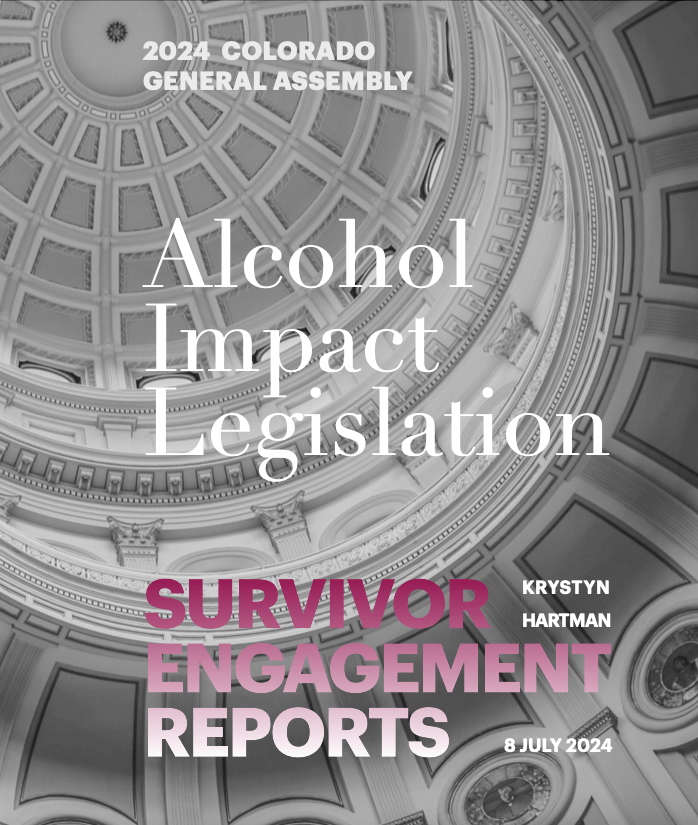
CO HB24-1156 is only one among ALL of the alcohol bills I tracked this past legislative session. I generated individual reports on each of them culminating in a 160-page collection, which I sent to Governor Polis and to members of the Senate Ethics Committee early July. As of the date of this post, I’ve not heard from any of them, but I’d also sent the collection to the Colorado Domestic Violence Fatality Review Board because I’d referenced their data throughout the legislative session, and they did reach out to me and I had a very enlightening and amazing meeting with a representative from that Review Board.

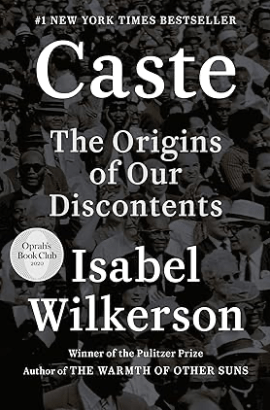
I’d recently finished reading the book Caste: Origins Of Our Discontents by Isabel Wilkerson when the session began so it was almost too easy to see the overwhelming evidence that we have a caste system of substance use baked into our laws and criminal justice system — and that it is alive, well, and functioning as its framers intended.

Lawmakers even slipped this elite cigar festival exemption into the ruling caste alcohol wine walks bill HB24-1156, the focus of this post, for added protection.

“There needs to be a place where elderly white men can still enjoy a good cigar” declared Colorado Senator Tom Sullivan.

Of all the alcohol bills tracked this session, this one, HB24-1156 is the most ironic and amusing to me, so am posting that report here. For all the talk of evidence-based this and data-based that, all it took to override all that evidence and data was the declaration of an elderly white male lawmaker about his entitlements. Yikes!

Here is PDF of my report for those interested. Again, this one is the most ironic and amusing to me.


It was fascinating tracking an entire category of bills. We invest in what we value.


Krystyn Hartman is a graduate student in the Masters of Public Policy program at the University of Colorado.

This project is on hold. Am taking the semester off.

I’ve withdrawn from the semester, so this project is on hold for the time being. (I’m having some challenging health issues and am a bit discouraged, frankly.)

I created a little music video as I reflected on the token “you have three minutes; thank you for your testimony” process. I used my phone and had to stack my own vocals and used a hammer on a piece of wood for the gavel bang sounds. It is actually kinda cool!

Thank you for your interest in this project.

Krystyn Hartman

Denver Post ran SB24-020 letter

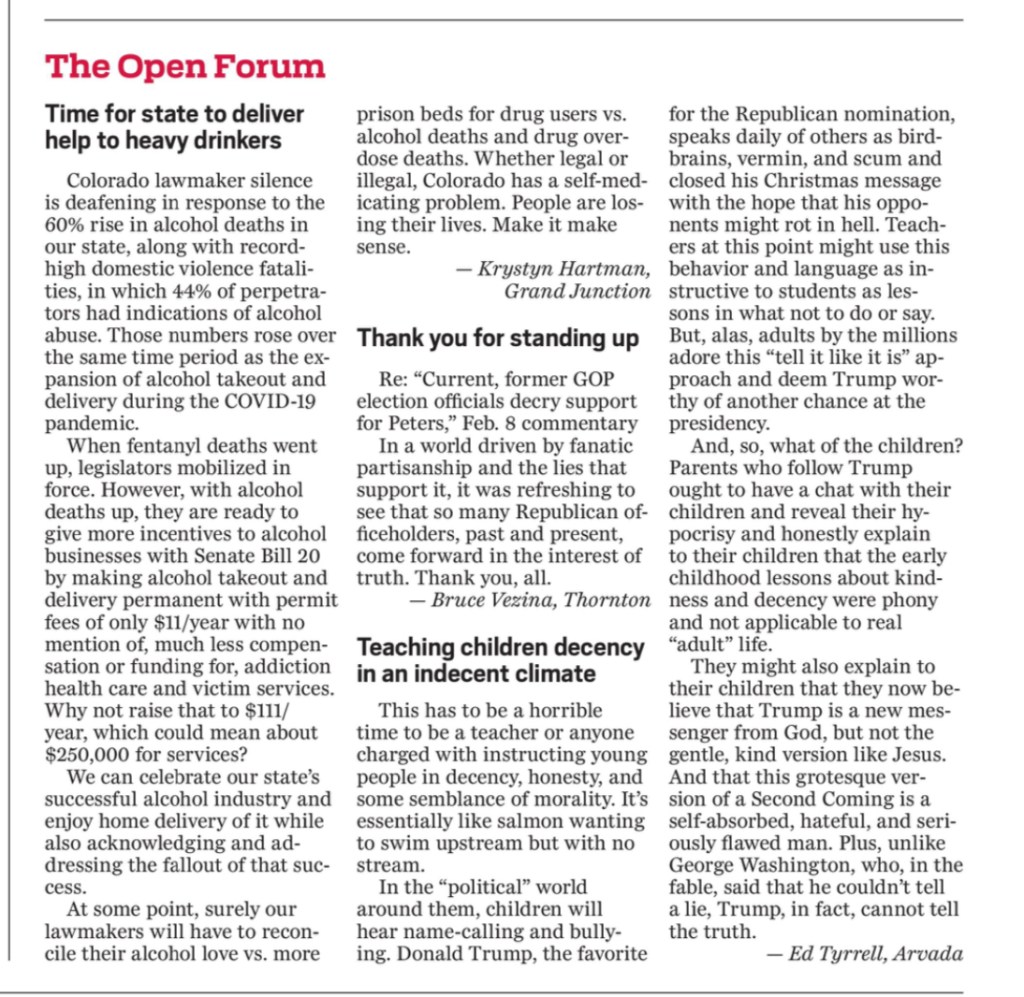
After sending daily emails to the sponsors of SB24-020 on alcohol takeout and delivery with no response at all, it occurred to me that maybe my emails were going to their spam folders and that they aren’t seeing them, so I sent a letter to the editor of The Denver Post hoping they’d run it and that the bill’s sponsors might then see it. It was a chance worth taking. They published it in today’s print edition Friday, February 9, 2024 with the title Time for state to deliver help to heavy drinkers. And no, I didn’t come up with that, they did. (Their Forum editor CJ is really good.) Hopefully, the bill’s sponsors will see it.

As I wrote in the letter and in the testimony, we can celebrate our state’s successful alcohol industry and enjoy home delivery of it while also acknowledging and addressing the fallout of that success. It is not an unreasonable ask.


Post Author: Krystyn Hartman is a graduate student in the Masters of Public Policy program at the University of Colorado School of Public Affairs. This site is a test research project.

Policy Work Groups Reports are an extension of citizen PolicyWorkGroups.com.

Denver Biz Journal misreported on SB24-020, but corrected

A Denver Business Journal story published February 7 reported that there was no opposition to SB24-020 regarding alcohol takeout and delivery, which is not true. There was opposition and with amendments. I left a message with the reporter about the error and she called back the next day apologizing for the error and we were able to clarify the details. She said they’ll add a correction to the story. She was super nice and we had a good conversation.

Here is link to the story. There is a paywall after one visit though, FYI. (I don’t know if that’s one time forever or one time a month.)

https://www.bizjournals.com/denver/news/2024/02/07/restaurant-alcohol-delivery.html


Post Author: Krystyn Hartman is a graduate student in the Masters of Public Policy program at the University of Colorado School of Public Affairs. This site is a test research project.

Policy Work Groups posts are an extension of citizen PolicyWorkGroups.com.

Policy work groups concept shared with CCJJ/TCJJ

Too many citizens feel our individual voices don’t matter to lawmakers relative to lobbyists and special interest groups. Economically speaking, that has proven true. So, how do we increase the marginal benefit of citizen voices relative to special interest groups, lobbyists and policy monopolies when it comes to lawmakers’ time and priorities on any given day? By taking a policy co-design strategic approach to criminal and juvenile justice issues that increases citizen inputs while respecting the time and attention limits of lawmakers and related influencer bureaucrats. Enter: Citizen Policy Work Groups.

The new Transforming Criminal and Juvenile Justice Commission (TCJJ) created by executive order to replace the old Commission on Criminal and Juvenile Justice (CCJJ), which was sunsetted by the Colorado legislature last year, 2023.

I offered public comment, again, this afternoon (February 5) showing a more inclusive stakeholder structure that incorporates affected citizen voices into the TCJJ goals and put together a 1 page (2 sided) policy memo presenting the benefits of co-design strategies in criminal justice related policies. They gave me an extra minute, so that was good!

Post Author: Krystyn Hartman is a graduate student in the Masters of Public Policy program at the University of Colorado School of Public Affairs. This site is a test research project.


Policy Work Groups posts are an extension of citizen PolicyWorkGroups.com.
Lawmaker silence on alcohol deaths raises questions for SB24-020

Recent reports on the 60% rise in alcohol deaths that have surpassed drug overdose deaths in Colorado over the same time period as the permitting and expansion of alcohol takeout and delivery initiated by executive order in response to the COVID pandemic lockdown raises affected citizen questions concerning Senate Bill 24-020 to make alcohol takeout and delivery expansion permanent.

The alcohol delivery and takeout program has been a huge success and important boon for restaurants and related businesses who sell alcohol. The pandemic based bill is set to expire in 2025. The proposed bill SB24-020 will make the alcohol delivery and takeout permanent at only $11/year for a permit fees. Last year the state had around 2500 permit applications, according to the fiscal statement attached to the bill, for a total of $26,000 to the state.

However, the rise in alcohol deaths over the same time period could justify the need for a correlation study to make sure there is no connection between the rise in deaths and alcohol delivery and takeout expansion before making it permanent.

I testified suggesting an amendment to raise the annual permit fee from $11 to $111 ($8/month) so that the added $100 can go to addiction healthcare and housing to the tune of $250,000 and the state sill gets to keep the $26,000.

Everyone wins. Alcohol takeout and delivery are made permanent in the law so that industry and their customers benefit while the industry also contributes to the addiction healthcare and housing fallout for those who don’t benefit from their resulting success. The bill passed committee unanimously without amendments and moves to Senate Finance Committee tomorrow, February 6.

Here’s the 1 page (2 sided) citizen policy brief I put together and sent to the bill’s sponsors after testifying to the Senate Business, Labor & Technology Committee on Thursday, February 1, 2024.


Post Author: Krystyn Hartman is a graduate student in the Masters of Public Policy program at the University of Colorado School of Public Affairs. This site is a test research project.

Policy Work Groups posts are an extension of citizen PolicyWorkGroups.com.
CCJJ Bills Won’t Count Against Lawmaker Limits

Listening to the entire four-hour Working Group on Transforming Criminal and Juvenile Justice Friday, January 19, was worth the time simply to learn this one fact.

In Colorado, lawmakers have an introduction limit of five bills each. However, bills proposed by the old Commission on Criminal and Juvenile Justice (CCJJ) did not count against lawmaker five bill limits. Several legislators in the new Working Group (TCJC) joked about how tired they are of having to beg fellow legislators to sponsor CCJJ bills. That’s when we learned that the CCJJ bills didn’t count against their five.

They agreed that that feature should be part of the new TCJC too, so they don’t have to beg for bill sponsors.

Not only was the old CCJJ and the new TCJC a powerful policy monopoly, but they even got and will get a legislative pass by not having to sell their bills to lawmakers the same way everyone else does.

There was an encouraging, yet ironic, overriding message in the four-hour discussion, which was the need for more affected citizen engagement when it comes to policy design and development, but all acknowledged not knowing how to solve that problem.

At the end of the nearly four hours, I as a “public comment citizen” was allowed four minutes to give my qualifications as a professional and as lived experiences along with the request to present our Citizen Policy Workgroups concept as a solution to the need for more citizen engagement, but was told, and you can hear it on the recorded meeting, they do not allow for extended presentations from individual citizens and that it is only a one-way testimony, not an opportunity for questions and engagement. They spent four hours stating the problem, then use old processes to dismiss affected citizen inputs and solutions.

I will update on the specific interagency problems and challenges they discussed in the next post. That the CCJJ and TCJC bills don’t count against the lawmaker bill limits is worth a post all on its own.

The TCJC was created in October of 2023. They are expected to have a purpose, a mission, a reason for existing, by March 1 so that Governor Polis can push it to the legislature with the intent of having them vote to make the TCJC a permanent policy monopoly with legislative powers.

We will update our questions with answers as we learn those answers. If you know the answer to these questions, please let us know.

Our Questions

  • What problem or problems is the CCJJ meant to solve?
  • Are there other ways the problems can be addressed effectively other than with the creation of a permanent policy monopoly?
  • Why don’t CCJJ bills count against the five-bills limit the way most other special interests and causes do?
  • Why are we giving legislative powers to a policy monopoly over citizens at citizens’ expense?
  • Why did Governor Polis create a policy monopoly with legislative powers without a clear mission? He had to have a basis, a purpose, for issuing the executive order that brought it back to life?
  • Why aren’t citizens allowed to present solutions to government task forces and commissions? Especially when the need for affected citizen inputs at the policy development stages was acknowledged by every member of the group?

Links

Colorado Commission Working Group On Transforming Criminal and Juvenile Justice website


Post Author: Krystyn Hartman is a graduate student in the Masters of Public Policy program at the University of Colorado School of Public Affairs. This site is a test research project.

Policy Work Groups posts are an extension of citizen PolicyWorkGroups.com.


Updated/edited 1-26-24

New Colorado Commission on Criminal & Juvenile Justice 2024: Student Policy Memo

I spent most of my first semester in graduate school in the Master of Public Policy program at the University of Colorado Denver researching and writing about the old and new Colorado Commission on Criminal and Juvenile Justice (CCJJ) that culminated in a major term paper Policy Memo assignment (that I got an A on).

The Colorado state legislature chose not to continue the old CCJJ last year, which meant the end, the “sunsetting,” of the old CCJJ. Governor Polis was not happy that the lawmakers ended the CCJJ, so he issued Executive Order 2023-002 to create the new Working Group On Transforming Criminal & Juvenile Justice, which as he explained in a public statement, is to replace the old CCJJ, which he expects the legislature to pass this year. The legislature already chose to end it, so it will be interesting to see if they stand by their original position or give in to the governor, law enforcement and district attorney pressures to pass it.

In the Policy Memo not only was I able to identify the CCJJ as a part of a bigger iron triangle policy monopoly that excluded affected citizens in the decision process, but one of my conclusions is a suggestion that they create affected citizen working subgroups at the table, including a way to do that. In fact, it was that paper that led to the idea for the other class (economics) term paper titled Equitizing Citizen Inputs In Policy Decisions that led to this Citizen Policy Work Group and website idea as a test project.

Because this site and the whole Citizen Policy Work Groups idea is barely a few weeks old, I’m still thinking through the logistics but since the new CCJJ working group has already met and is preparing their strategy for legislative approval in March, I thought I’d at least get my policy memo uploaded here as a starting point from which to add update posts related to the new CCJJ as the legislative session progresses.


Post Author: Krystyn Hartman is a graduate student in the Masters of Public Policy program at the University of Colorado School of Public Affairs. This site is a test research project.

Policy Work Groups posts are an extension of citizen PolicyWorkGroups.com.

Equitizing Citizen Inputs In Public Policy: An Economics Policy Brief

The idea for citizen Policy Work Groups is the result of a term paper assignment in my Economics and Public Finance class. My name is Krystyn Hartman and I’m a first year graduate student (at the time of this post) at the University of Colorado School of Public Affairs with a concentration in policy entrepreneurship and advocacy.

The assignment, a policy brief, was to state a policy problem, use economic analysis to investigate the problem, then come up with two “off the wall, but plausible” solution proposals for the problem as a way to demonstrate our understanding of the economic concepts learned over the course.

One of my biggest frustrations as a citizen is the lack of relevance our individual voices, concerns and insights have when it comes to policies that impact us — sometimes positively, sometimes negatively. So, for my policy brief, I decided to take on the problem of “lawmakers care too little about messages from affected citizens in proportion to special interest groups when it comes to public policy.”

Interestingly, as a result of applying the economic tools learned, I discovered that there is an underlying socially maximizing efficiency basis when it comes to special interest groups over individual citizens. Okay, so rather than attempt to suppress or lesson the special interest groups marginal benefits, for my two “off the wall” solutions, I flipped it around and asked, “how can we increase the marginal benefit and value of individual citizen voices relative to the value and efficiency of special interest groups?”

And that’s when the idea of citizen Policy Work Groups or POLIWOGS as I refer to it in the final Policy Brief hit me as one of the solutions. Regional policy work groups of affected citizens addressing the grassroots impacts in specific policy areas can provide additional insights, data, and considerations, including alerts of potential intended and unintended consequences, for lawmakers. By concentrating the inputs and resources of groups of affected citizens of specific policy areas, the value of the individual affected citizen increases substantially as shown, using economic analysis, in my policy brief.

When I got an A on the brief after turning it in (December 16, 2023), along with encouraging feedback, it was enough encouragement to motivate me to want to test this one. When the idea was met with an openness to consider its inputs by a local government commission, I decided it was worth at least a small test, so yesterday (December 22), I spent most of the day creating this website as a starting point.

If you enjoy reading economic analysis and want to read the policy brief that launched this citizen Policy Work Groups idea, you can read it by clicking the link or download the PDF.

Thank you for your interest!


Policy Work Groups Reports are an extension of citizen PolicyWorkGroups.com.